Dirt work · Pads, drives, drainage
Dirt work that sheds water the first time
A pad that holds and a drive that drains is mostly a question of fall — getting it right, and getting it compacted so it stays right. That is the whole job.
Call 940-567-8111
Get a free estimate
Free on-site estimates · Jack, Palo Pinto, Young and Wise counties
What is dirt work?
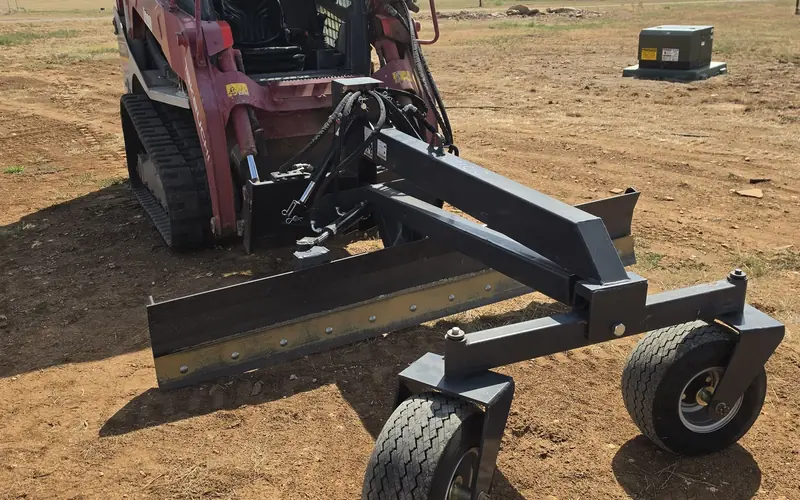
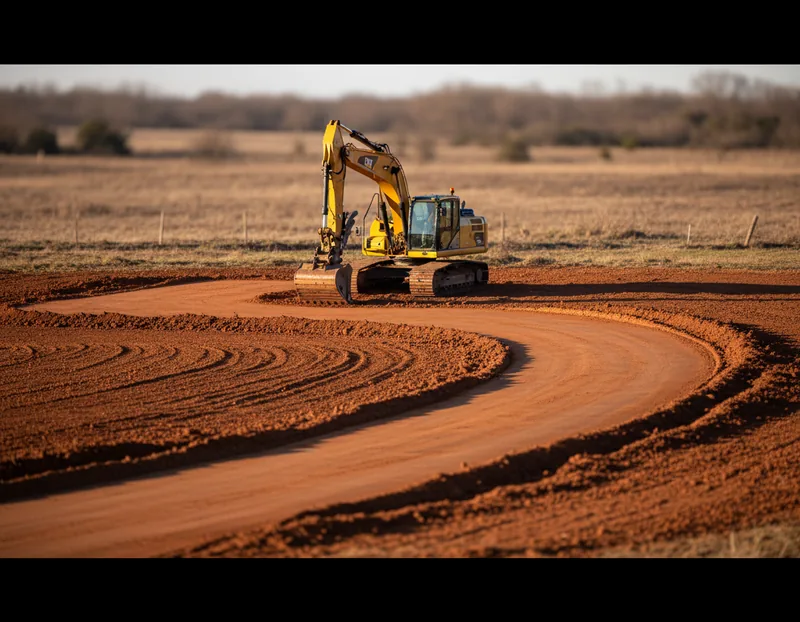
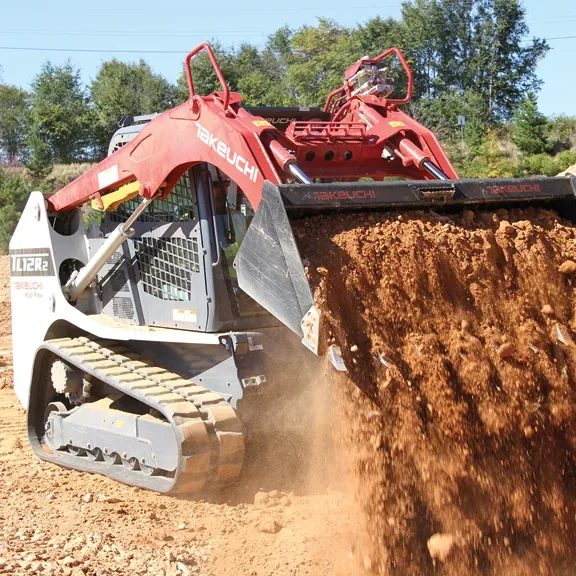
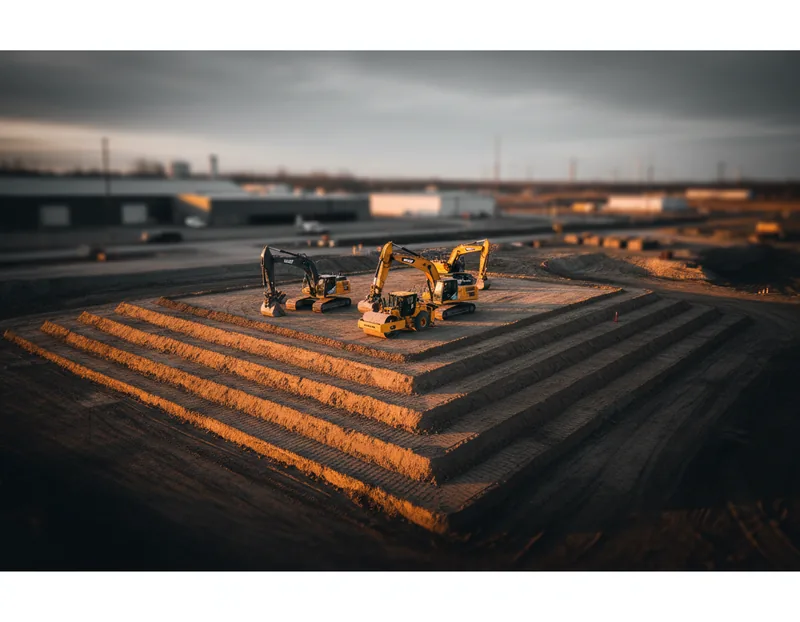
Dirt work is shaping the ground so it drains, supports weight, and stays where you put it. In practice that means building house, barn and shop pads; cutting and rocking driveways; setting culverts; correcting drainage that is running the wrong way; and leveling ground that has washed, rutted or settled. We do it across Jack, Palo Pinto, Young and Wise counties with our own excavator, dozer and Takeuchi track loaders. Estimates are free and on-site.
What we build
House & barn pads
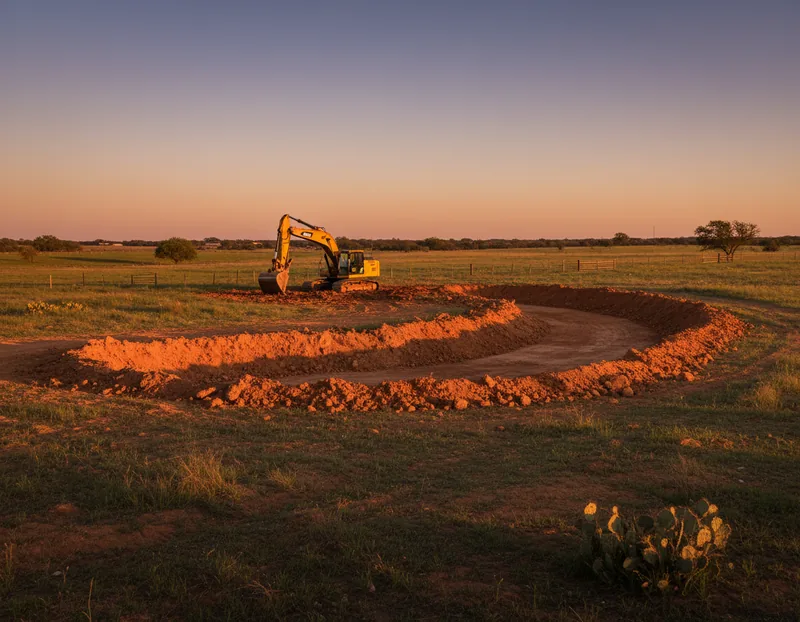
Cut, filled, shaped and compacted to a finished elevation that sits above the surrounding grade so water runs away from your slab, not toward it.
- Cut and fill to elevation
- Compacted in lifts
- Crowned and shaped to drain
- Staked to your building footprint
Driveways & culverts
New drives cut and rocked, old drives reshaped and re-crowned, culverts set at the right invert so the ditch keeps working.
- New drive cut and base rock
- Re-crowning and reshaping
- Culvert sizing and setting
- Cattle guard approaches
Drainage correction
Water standing where it should not be, running through a barn, or cutting a rut across a pasture. We reshape the ground so it goes where it should.
- Swales and diversions
- Pasture and field drainage
- Fixing water running at a structure
- Erosion and washout repair
Leveling & grading
Rough grading behind a clearing job, smoothing rutted or terraced ground, and finish grading ahead of grass, gravel or concrete.
- Rough grade after clearing
- Smoothing ruts and old terraces
- Finish grade for seeding
- Arena and pen leveling
Why fall and compaction are the whole game
Almost every dirt work problem we get called out to fix is one of two things: the ground does not fall the way it needs to, or the fill was never compacted properly.
Fall is slope — how much the ground drops over a given distance. A pad that looks flat to the eye needs a deliberate crown and a deliberate fall away from the building on every side. A driveway needs a crown down the centerline and ditches that actually carry water somewhere. Get this wrong and no amount of rock will save the drive; you will be adding material to the same soft spot every spring.
Compaction is the other half. Fill dirt placed in one thick lift and driven over a couple of times will settle — and it settles unevenly, which is worse than settling a lot. Placing it in lifts and compacting each one is slower and it is the difference between a pad that is still true in five years and one that has a low corner by next winter.
Both of these are invisible in a finished job. That is exactly why they are the corners most often cut, and it is why we would rather walk your ground and talk about water than quote you over the phone.
Questions people ask us
How much does a house pad cost?
It depends almost entirely on how much dirt has to move and whether it can come from your own property or has to be hauled in. A modest pad on ground that is already close to level, using on-site material, is a very different number from a pad that needs several hundred yards of imported fill. We quote after seeing the site — anyone who gives you a flat pad price over the phone is guessing.
Can you use dirt from my own property?
Usually, and it is normally the cheapest way to do it. Very often the fill for a pad comes out of a stock tank we are digging or cleaning out on the same job, which gets you two things done for one mobilization.
How long before I can build on a new pad?
If it is compacted properly in lifts, it is ready when we leave. What we do recommend, where your schedule allows it, is letting a pad see one good rain before the slab goes down — it is a free test of whether the drainage does what we said it would.
Do you haul in gravel and base rock?
Yes. We can source and haul base rock and gravel for drives and pads, or place material you have already had delivered.
My driveway washes out every spring. Can that be fixed?
Nearly always, and nearly always the fix is drainage rather than more rock. If water is running down your drive instead of across it and off, adding gravel just gives the water something new to carry away. We look at where the water comes from first.
Do you do dirt work and clearing together?
Most of the time, yes. Clearing and grading on the same mobilization saves you money and means the ground gets shaped correctly right after the brush comes off, rather than being left to wash for a season.
Where we work
We are based in Jacksboro and work out from there across Jack County, Palo Pinto County, Young County and Wise County. If you are close to the edge of that circle, call and ask — we will tell you straight whether it is worth the drive for both of us.
- Jacksboro
- Bryson
- Perrin
- Cundiff
- Jermyn
- Post Oak
- Graham
- Olney
- Mineral Wells
- Graford
- Bridgeport
- Runaway Bay
- Chico
- Bowie
- Whitt
- Salesville