

Fence lines & brush
Opening up a grown-over fence line so you can actually see the wire, string new fence, or run a hot line without fighting mesquite every ten feet.
Takeuchi TL12 & TL10 · Owner-operated
Two Takeuchi compact track loaders and the operator who owns them. For the work that is too fiddly for a dozer and too much for a tractor.
Call 940-567-8111 Get a free estimate
Free on-site estimates · Jack, Palo Pinto, Young and Wise counties
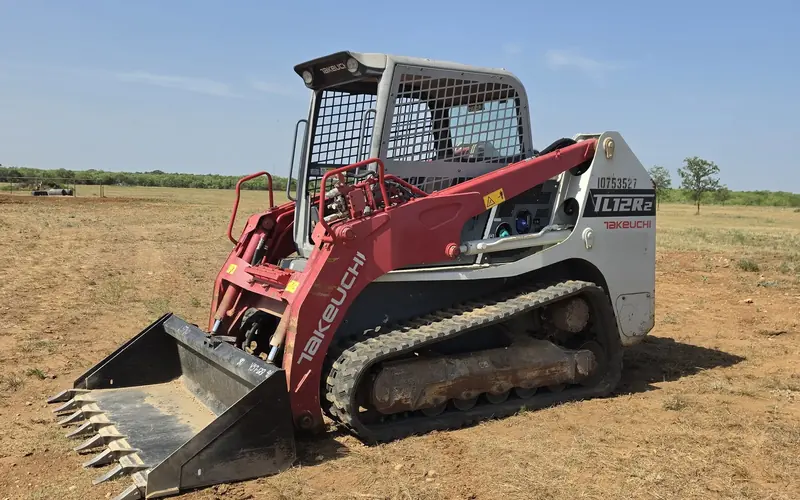
A compact track loader handles the jobs that need precision in a small footprint — clearing brush along fence lines, grading and crowning a driveway, shaping a pad, moving rock and material, cleaning up behind a bigger machine, and working close to buildings, pens and trees where a dozer cannot. We run a Takeuchi TL12 and a TL10 around Jacksboro and across Jack, Palo Pinto, Young and Wise counties. Tracks rather than wheels means less ground pressure and less damage to your pasture.
Opening up a grown-over fence line so you can actually see the wire, string new fence, or run a hot line without fighting mesquite every ten feet.
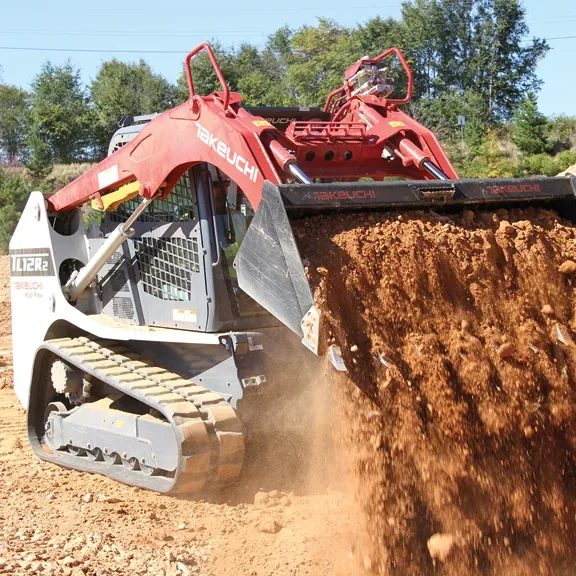
Reshaping, re-crowning and spreading rock on a drive that has flattened out and started holding water down the middle.
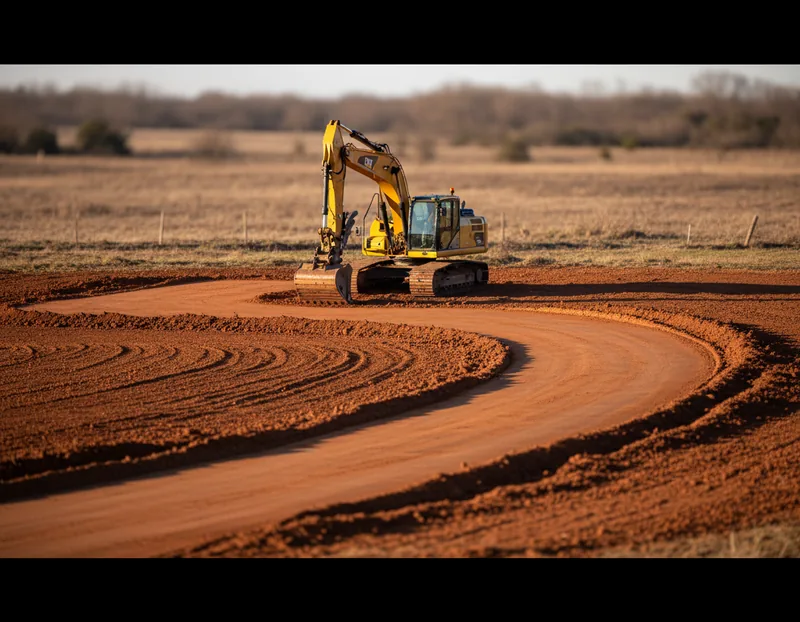
Shed pads, shop pads, pen and arena leveling, and the fine grade after a bigger machine has done the bulk of the moving.
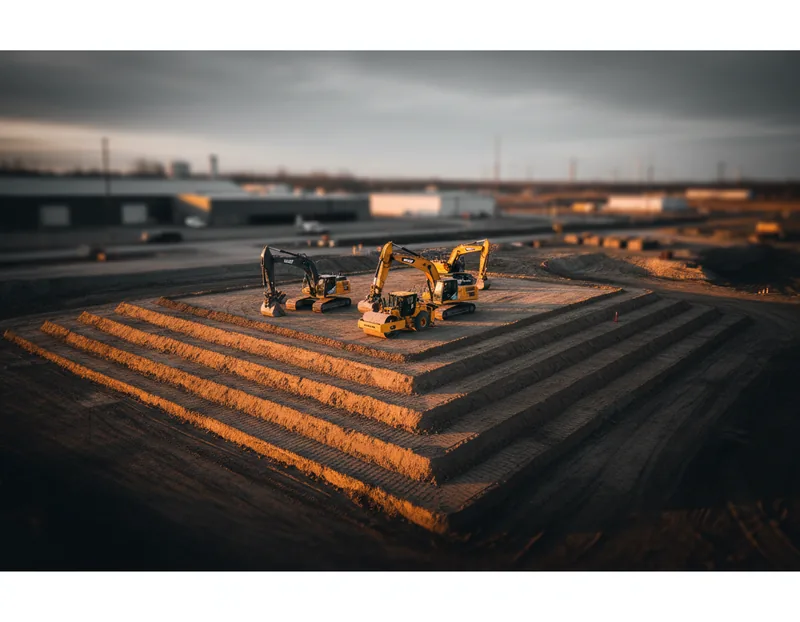
Moving rock, gravel, dirt, hay, pipe and panels around a place — the errands that eat a whole weekend when you are doing them by hand.
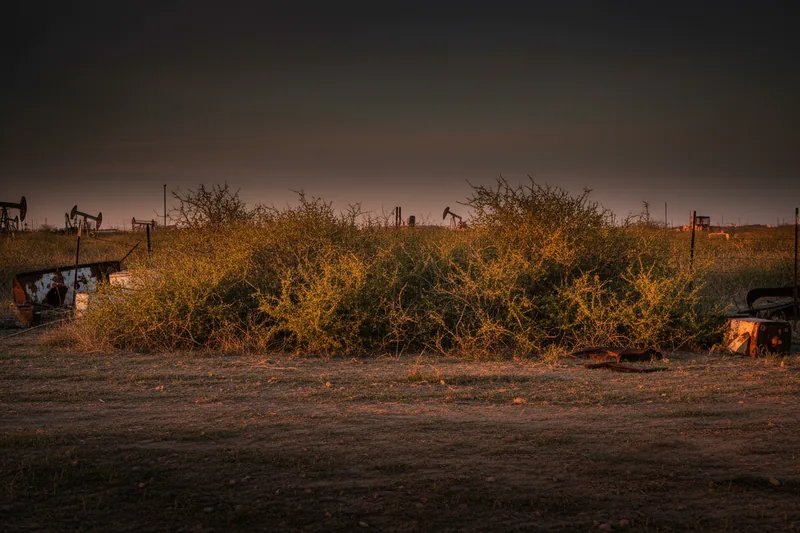
Piling and loading brush, raking out roots and rock, and tidying behind a clearing job so the ground is ready for seed.
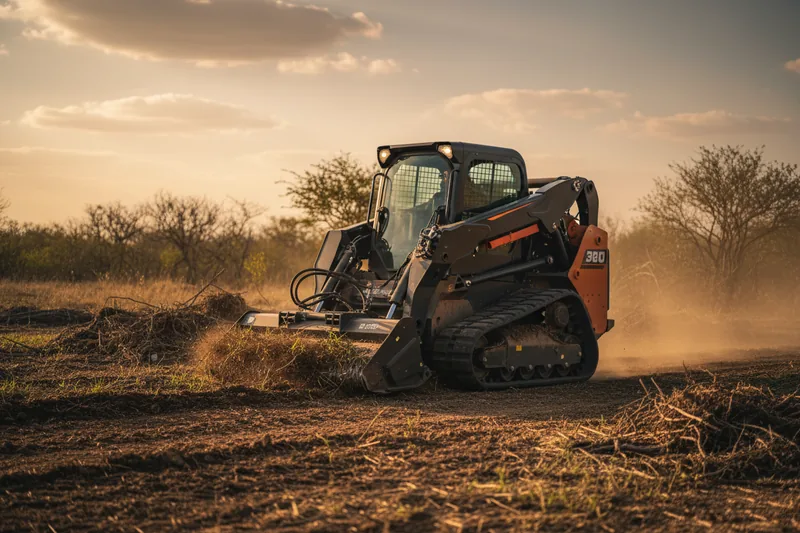
Between buildings, inside pens, close to septic fields and water lines, and anywhere a dozer would do more harm than good.
Both of our loaders are compact track loaders rather than wheeled skid steers, and on rural North Texas ground that matters more than it sounds.
A wheeled machine puts its weight on four small contact patches. On dry, firm ground that is fine. On the black clay that most of this county sits on, after a rain, it means ruts you will be looking at until you smooth them out yourself. Tracks spread the same weight over a much larger area — less ground pressure, better traction on slope, and a machine that can keep working a day or two earlier after weather than a wheeled one can.
The TL12 is the bigger of the two and does most of the work. The TL10 goes where the TL12 will not fit and does the detail work. Between them there is not much on a normal place we cannot reach.
Either. Well-defined work — a driveway, a pad, a specific stretch of fence line — is usually better quoted as a job so you know the number in advance. Open-ended work, or a list of odd jobs around a place, is usually fairer to both of us hourly. We will tell you which one we think fits your work.
There is a practical one. Getting a machine loaded, hauled to you and unloaded costs the same whether it works one hour or six, so very small jobs a long way out do not price well. Call and we will be straight with you about whether it is worth doing.
Much less than a wheeled machine would. Tracks spread the load. That said, no machine is weightless — if the ground is genuinely saturated we would rather wait a few days than leave you a mess to look at.
Yes, with an auger attachment. Fence posts, gate posts, and pier holes for small structures.
A tractor with a loader is good at lifting and carrying and poor at grading, because the loader arms and the operator's sightline are not built for it. A track loader is built to grade — you can hold a consistent blade height and actually shape ground with it. For mowing, a tractor wins; see tractor mowing.
We are based in Jacksboro and work out from there across Jack County, Palo Pinto County, Young County and Wise County. If you are close to the edge of that circle, call and ask — we will tell you straight whether it is worth the drive for both of us.
Call it out to us and we will tell you what a day with a machine and an operator would knock off it.